

An Introduction to Literary Fare: Exploring Classic Stories Through Food
I’ve always been a little obsessed with food.
This probably isn’t much of a revelation. It tends to announce itself fairly quickly in my life. I love a good meal, a well-timed snack, a table set with care, and the particular kind of happiness that comes from something warm, fragrant, and shared.
But food has never been only about flavor for me.
Food is a story.
It is the story of hunters and gatherers, hearth fires and harvests, scarcity and abundance, family recipes and unfamiliar feasts. It is tied to science, trade, class, culture, industrial change, migration, celebration, survival, and memory. It is one of the few things every human being needs to live, and because of that, it finds its way into nearly every corner of history—and nearly every corner of story.
Have you ever read a book and felt suddenly transported by a single description of food?
Think of Oliver Twist, bowl scraped clean, desperate with hunger, asking, “Please, sir, I want some more.”
Or Anne Shirley’s raspberry cordial mishap at Green Gables, where one innocent bottle turns into a scene no reader quite forgets.
Or Alice nibbling an “Eat Me” cake and sipping from a “Drink Me” bottle as Wonderland shifts around her in impossible proportions.
Even in more modern stories, food often tells us what words alone cannot. In The Hunger Games, Katniss Everdeen hunting to keep her family alive says one thing about her world; the Capitol’s tables, groaning with luxury and excess, say another.
From lembas bread in The Lord of the Rings to gruel, tea cakes, tavern meals, picnic baskets, plum puddings, and pantry shelves, food has a way of anchoring a story. It tells us who has enough and who does not. It reveals comfort, hardship, celebration, habit, longing, and home. Sometimes it moves the plot along. Sometimes it appears for only a moment. But even the smallest bite can give us a taste of the world beyond the page.
I credit food, at least in part, with how I fell in love with both literature and history.
Food made fictional characters feel more real to me. It helped me imagine not just what happened to them, but what it might have felt like to be there. What the air smelled like. What was served at the table. What a person might have eaten before setting off on a journey, facing a disappointment, welcoming a guest, or sitting quietly by the fire.
And in history, food opened doors I hadn’t expected. It made the past feel less like a list of dates and more like a place once inhabited by ordinary people with hungry children, crowded kitchens, special-occasion dishes, local customs, limited resources, and familiar comforts. Food became a pathway into everyday life.
Over the years, I became more and more aware of this subtle hook.
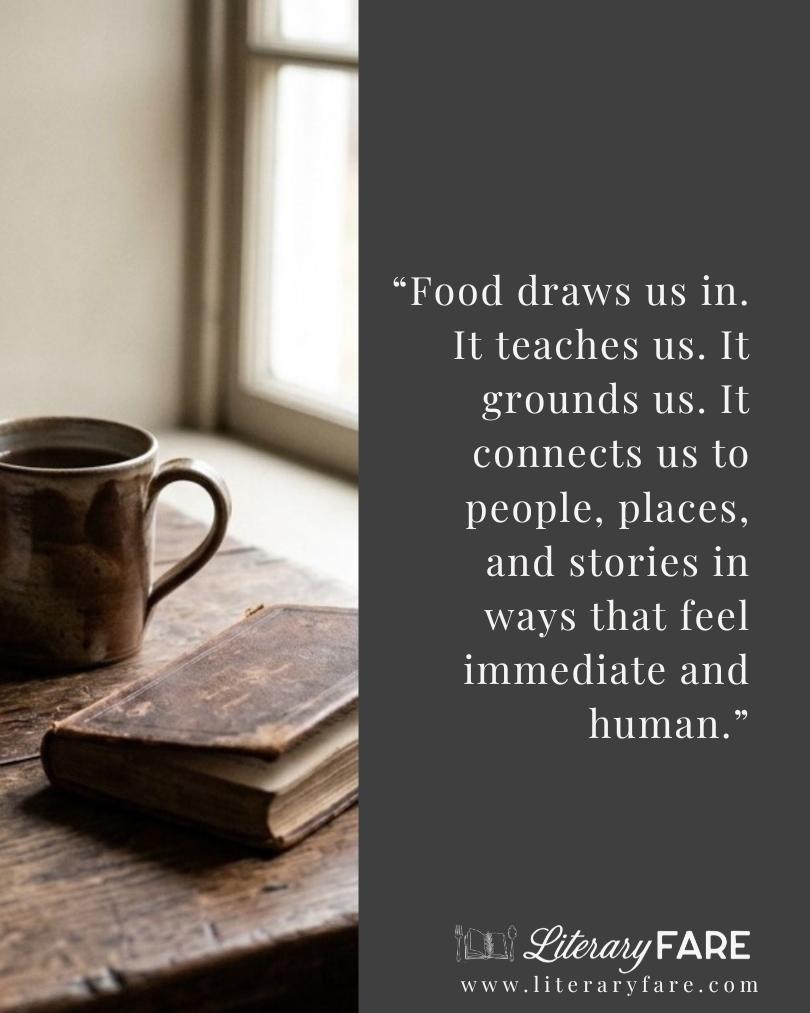
Food draws us in. It teaches us. It grounds us. It connects us to people, places, and stories in ways that feel immediate and human.
That is how Literary Fare was born.
Literary Fare is my way of bringing books to the table. Through essays, recipes, historical notes, literary menus, classroom resources, and imaginative extras, I explore classic stories through the lens of food, culture, setting, and sensory experience.
It is for readers who want to linger a little longer in the books they love.
It is for book clubs looking for a more immersive gathering.
It is for homeschoolers and educators who want classic literature to feel vivid, approachable, and alive.
And it is for anyone who has ever finished a story and wished, just for a moment, that they could step inside it.
Here on the blog, you’ll find reflections on food in literature, behind-the-scenes notes from Literary Fare projects, historical tidbits, recipe inspiration, reading ideas, and ways to experience classic stories beyond the page.
You won’t need anything elaborate to begin.
A book.
A bit of curiosity.
Perhaps something simple to eat or drink alongside the story.
That’s enough.
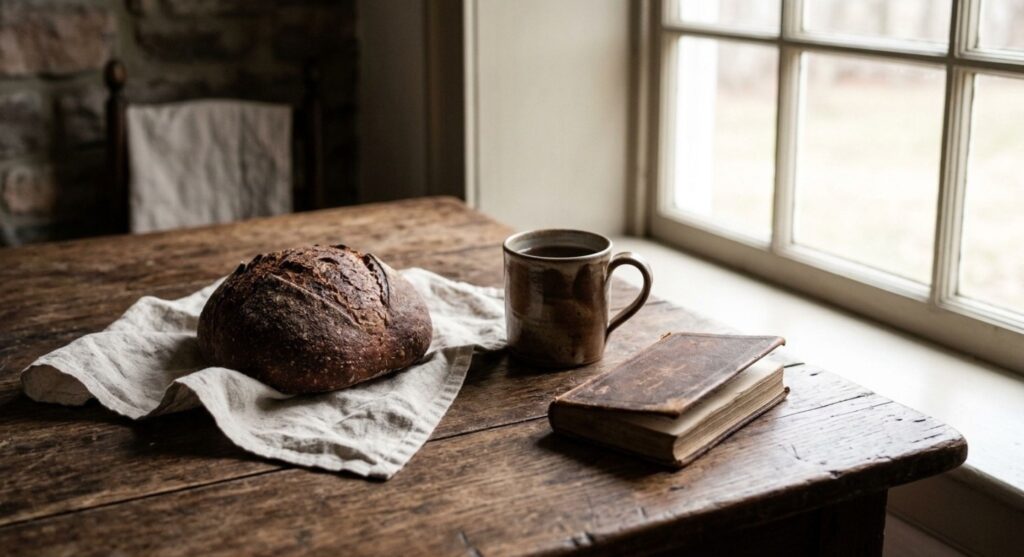
So pull up a chair, pour a cup of tea, butter a slice of bread, or simply settle in with a beloved book nearby.
Welcome to Literary Fare.
I’m so glad you’re here.